Signed, Sealed, Compromised: The Exploitable Gaps Inside Remote Identity Verification
For generations, the notary stamp served as one of the few remaining rituals of verified identity — a physical encounter designed to confirm that the person signing a deed, a will, or a power of attorney was exactly who they claimed to be. The pandemic accelerated what the technology industry had been pushing toward for years: the elimination of that in-person requirement. Remote online notarization, or RON, is now legal in the majority of U.S. states, and digital identity verification platforms have expanded far beyond notarization into bank account openings, wire transfer authorizations, and healthcare record access.
The convenience is real. So is the risk.
A System Built on Assumptions
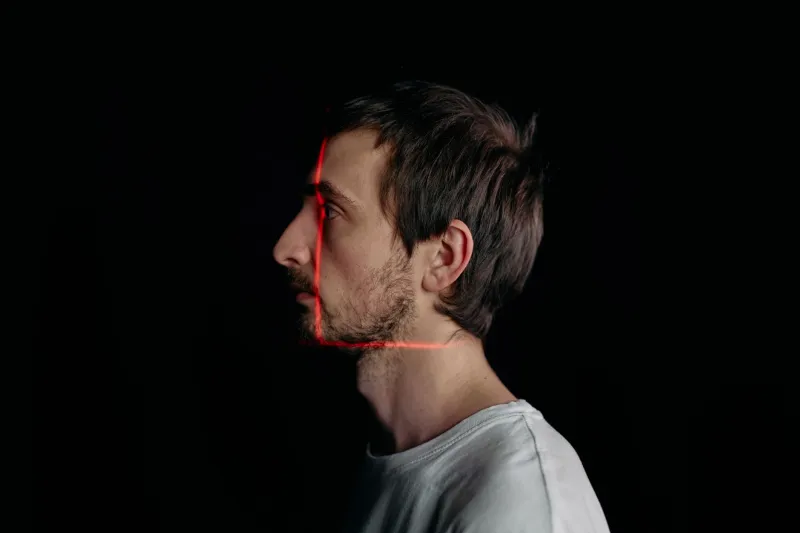
Digital identity verification generally works through a combination of document scanning, facial recognition, and what the industry calls "liveness detection" — algorithmic tests designed to confirm that the face on a screen belongs to a living human being, rather than a photograph or a pre-recorded video. On paper, this sounds robust. In practice, the implementation varies dramatically from one vendor to the next, and the standards governing these systems remain fragmented.
The Federal Trade Commission has documented a steady rise in identity theft complaints involving remote account access, but the specific intersection of RON fraud and identity verification exploitation is poorly tracked at the federal level. Several state attorneys general have opened investigations, but jurisdiction is complicated when the verification platform, the notary, and the fraudster may each be operating in different states — or different countries.
Critically, no single federal agency owns this problem. The Consumer Financial Protection Bureau has authority over financial institutions but limited reach into the third-party technology vendors those institutions contract for verification. The result is a patchwork of oversight that sophisticated attackers have learned to navigate.
How Attackers Beat the Machine
Security researchers have demonstrated multiple methods for defeating commercial liveness detection systems, and several of these techniques require surprisingly modest technical resources.
Deepfake injection attacks represent one of the more advanced vectors. Rather than presenting a fabricated face to a webcam and hoping the algorithm fails to notice, attackers inject a synthetic video stream directly into the software pipeline, bypassing the camera input entirely. The verification platform never receives a real video feed — it receives a manipulated one that has already passed through a deepfake generation model trained on images of the target.
Such images are rarely difficult to obtain. Social media profiles, professional networking sites, and data broker repositories collectively provide attackers with enough source material to construct a convincing facial model for a significant portion of the American adult population.
Document spoofing remains a lower-tech but persistently effective approach. Many verification platforms rely on automated document readers that analyze government-issued IDs for security features. Researchers at multiple universities have shown that modified or outright fabricated identity documents can pass automated checks at rates that would alarm most consumers. Human review, when it exists at all, is often performed by contractors working under significant time pressure, reviewing hundreds of submissions per shift.
Social engineering the verification workflow represents a third avenue. Some platforms allow users to attempt verification multiple times after an initial failure. Attackers exploit this by iterating their spoofing technique across successive attempts, treating the verification system as a puzzle to be solved rather than a barrier to be respected.
The Stakes Are Irreversible
What distinguishes identity verification fraud from many other forms of account compromise is the nature of the transactions it enables. A fraudster who gains access to an email account can cause significant harm, but many of those harms are recoverable. A fraudster who successfully impersonates a homeowner during a remote notarization and authorizes a deed transfer, or who completes a digital verification to initiate a large wire transfer, may trigger consequences that take years of litigation to partially unwind — if they can be unwound at all.
Real estate wire fraud, in particular, has become a crisis of significant proportions. The FBI's Internet Crime Complaint Center reported losses exceeding $446 million from real estate wire fraud in 2022 alone, a figure that almost certainly undercounts actual incidents due to underreporting.
Regulatory Blind Spots and Industry Incentives
The identity verification industry has a structural incentive problem. Vendors compete partly on the frictionlessness of their user experience — how quickly and easily a legitimate user can complete verification. Friction and security are not always opposites, but they exist in tension, and the market has historically rewarded speed over rigor.
Several large financial institutions have begun conducting independent audits of their verification vendors, and some have added secondary human review layers for high-value transactions. These are encouraging signs, but they are not universal, and smaller institutions often lack the resources to conduct meaningful vendor oversight.
At the state level, the standards for remote online notarization platforms vary considerably. Some states require vendors to meet specific technical standards; others require only that notaries use "reasonable" technology without defining what that means.
What Consumers Should Demand
While systemic reform moves slowly, individuals engaging in high-stakes digital transactions can take meaningful steps to protect themselves.
Before using any remote notarization or identity verification service for a consequential transaction, ask the following questions: Does the platform use injection attack detection, not merely liveness detection? Is there a human review layer for transactions above a certain dollar threshold or legal significance? What is the platform's fraud incident disclosure policy? Is it regulated by a named state authority?
For financial transactions specifically, request that your institution confirm in writing which third-party verification vendor it uses and what security certifications that vendor holds. The System and Organization Controls 2 (SOC 2) audit framework, while imperfect, provides a baseline of independent scrutiny.
Perhaps most importantly, treat any communication urging you to complete a verification step quickly — by email, text, or phone — as a potential social engineering attempt. Legitimate platforms do not require urgency. Fraudsters depend on it.
The notary stamp was never a perfect safeguard. But it was a moment of physical presence that imposed at least a minimum cost on impersonation. As that moment moves entirely into the digital realm, the burden of maintaining its integrity falls on an ecosystem that has not yet fully earned the trust it is being asked to carry.