Wired and Watched: How Your Smart Home Became the Newest Frontier for Hackers and Data Brokers
When a family in Houston installed a smart security camera system last year, they believed they were making their home safer. They were partly right. The cameras recorded intruders, logged motion events, and sent alerts directly to their phones. What they did not anticipate was that the same network connection enabling those features would also expose their home to a different kind of intruder — one who never needed to set foot on their property.
This tension sits at the heart of the modern smart home: the very technology designed to protect and simplify domestic life simultaneously creates new avenues for exploitation. As the Internet of Things (IoT) expands deeper into American households, cybersecurity researchers are raising alarms that the industry has been slow to address.
The Attack Surface Nobody Talks About
Security professionals use the term "attack surface" to describe the total number of points through which an unauthorized user might attempt to access a system. A decade ago, the average home's digital attack surface was modest — perhaps a router and a few laptops. Today, it encompasses smart televisions, voice-activated speakers, robotic vacuums, connected thermostats, video doorbells, baby monitors, and even internet-linked kitchen appliances.
Each of these devices runs software. Software contains bugs. Bugs become vulnerabilities. Vulnerabilities become doors.
Researchers at cybersecurity firm Bitdefender identified thousands of exploitable flaws across popular consumer IoT products between 2020 and 2024, many of which went unpatched for months after disclosure. In several documented cases, cameras from well-known brands were found to transmit video feeds over unencrypted connections, meaning anyone positioned on the same network — or monitoring local traffic — could intercept footage in real time.
The problem is compounded by the fact that many smart home devices are manufactured with speed-to-market as the primary priority. Robust security testing is often treated as an afterthought, and firmware update mechanisms — the pipelines through which manufacturers push security patches — are frequently poorly implemented or ignored by consumers who never configure them.
Voice Assistants: Helpful Listeners With Long Memories
Of all the connected devices that have become fixtures in American homes, few raise more privacy concerns than voice-activated assistants. Amazon's Alexa, Google Assistant, and Apple's Siri are engineered to respond to spoken commands, which means they are, by design, always listening for a trigger phrase.
This architecture has produced well-documented incidents. In 2019, Amazon acknowledged that thousands of Alexa recordings had been reviewed by human contractors as part of quality-improvement programs — a disclosure that surprised many users who had not read the fine print. Independent researchers have repeatedly demonstrated that these devices can be inadvertently activated by audio that only partially resembles a wake word, capturing fragments of private conversation and transmitting them to remote servers.
Beyond accidental activation, voice assistants present a meaningful hacking target. Demonstrated attacks have used ultrasonic frequencies — inaudible to human ears but detectable by device microphones — to issue silent commands to smart speakers. Known as "dolphin attacks," these techniques have been used in laboratory settings to unlock doors, place calls, and access sensitive information, all without the device owner's knowledge.
Data Brokers at the Doorstep
The threat is not limited to external hackers. The companies that manufacture and operate smart home platforms occupy a legally ambiguous position when it comes to the data their devices collect. Usage patterns, device interaction logs, voice recordings, and home occupancy data all carry significant commercial value.
Data brokers — firms that aggregate and sell consumer information — have increasingly turned their attention to IoT-derived data. A 2023 investigation by the Federal Trade Commission found that several major data brokers were trading in precise location data harvested from consumer devices, including information that could reveal when a home was occupied, the household's daily routine, and even inferred behavioral patterns.
For domestic abuse survivors, law enforcement targets, or anyone with a legitimate reason to guard their physical location, this data pipeline represents a serious and underappreciated risk.
Real-World Exploitation: What Criminal Actors Are Doing Right Now
Theorical vulnerabilities matter less than the ways actual criminal actors are exploiting them. Law enforcement and cybersecurity firms have documented several recurring patterns.
Credential stuffing — the automated testing of username and password combinations harvested from unrelated data breaches — is one of the most common methods used to gain unauthorized access to smart home accounts. Because many consumers reuse passwords across services, a leaked credential from a shopping site may unlock a home security camera dashboard. Once inside, bad actors have been documented livestreaming footage to criminal forums, using camera access to monitor residents' schedules before physical burglaries, and in particularly disturbing cases, using two-way audio features to harass occupants.
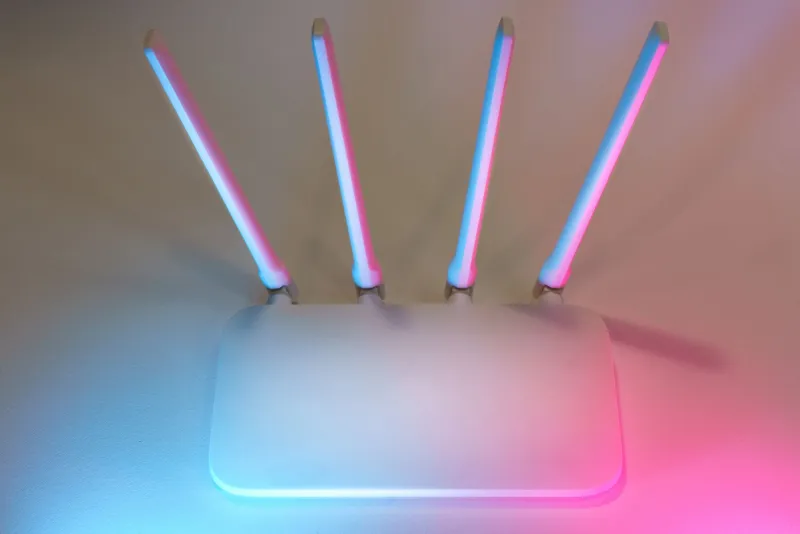
Router compromise is another common vector. Many home routers ship with default administrative credentials that are never changed. An attacker who gains control of a home router can intercept traffic from every connected device on the network, effectively sitting between the homeowner and the internet without triggering any visible warning.
Securing the Connected Home: Practical Steps That Actually Work
The good news is that meaningful protection does not require abandoning connected devices entirely. A layered approach to home network security can substantially reduce exposure.
Change default credentials immediately. Every new device — routers especially — should have its default username and password replaced before it is connected to the internet. Use a unique, complex password for each device and store credentials in a reputable password manager.
Segment your network. Most modern routers allow users to create a separate guest network. Placing IoT devices on a dedicated network segment, isolated from computers and phones that hold sensitive data, limits the damage an attacker can do if they compromise a smart bulb or thermostat.
Enable automatic firmware updates. Where a device supports it, configure automatic updates so that manufacturer security patches are applied without requiring manual intervention. For devices that do not support automatic updates, establish a regular schedule to check for and install them.
Audit what you own. Many households have devices that were connected once and forgotten — an old smart speaker in a spare room, a camera from a previous security system. These dormant devices often run outdated, unpatched firmware and represent unnecessary risk. Disconnect and properly factory-reset any device no longer in active use.
Review privacy settings deliberately. Most smart home platforms offer granular controls over data sharing, voice history retention, and third-party integrations. Spend twenty minutes reviewing these settings in the companion apps for each device. Opt out of data-sharing programs where possible, and delete stored voice recordings on a regular basis.
Consider a hardware firewall. Products such as the Firewalla or the eero's built-in security features allow homeowners to monitor outbound traffic from IoT devices, flag unusual connection attempts, and block known malicious domains at the network level.
The Policy Gap
Individual precautions, while necessary, address only part of the problem. The deeper issue is structural: the United States currently lacks a comprehensive federal IoT security standard. Efforts such as the IoT Cybersecurity Improvement Act of 2020 established baseline requirements for government-purchased devices, but consumer products remain largely self-regulated.
Several states, including California and Oregon, have enacted laws requiring manufacturers to equip connected devices with "reasonable security features" — but enforcement has been limited and definitions remain broad. Consumer advocacy groups continue to press for mandatory minimum security standards, vulnerability disclosure requirements, and clear data-retention limits.
Until those protections materialize at the federal level, the burden falls disproportionately on individual households to educate themselves and harden their own environments.
A Home That Watches Back
The promise of the smart home — convenience, efficiency, security — is genuine. These technologies, thoughtfully deployed and properly maintained, can meaningfully improve daily life. But that promise carries a condition: the same connectivity that makes a home intelligent also makes it legible to parties whose interests may not align with yours.
Understanding that duality is the first step toward navigating it. The devices in your living room are not neutral appliances. They are nodes on a global network, subject to the same threats that face any other internet-connected system. Treating them accordingly is not paranoia. It is prudence.