Conversations With Consequences: What AI Chatbots Actually Do With Everything You Tell Them
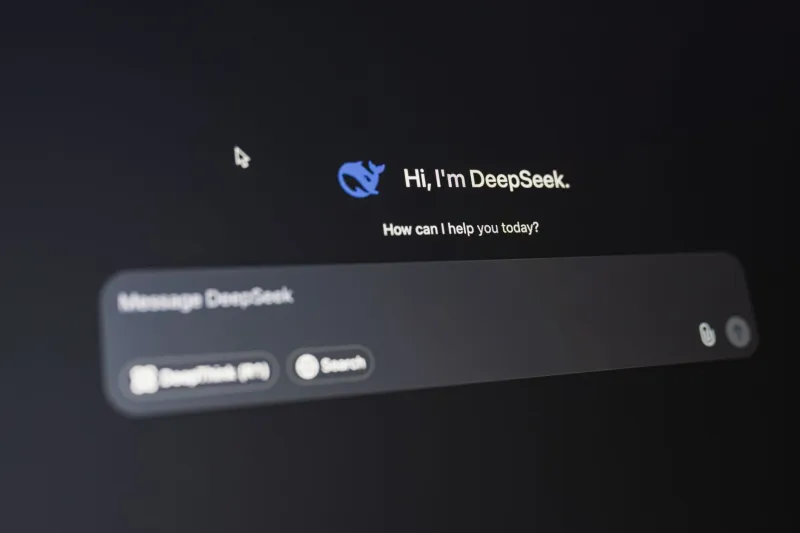
There is a peculiar intimacy to typing a question into an AI chatbot. The interface is clean, the response is instant, and the exchange feels private — almost like thinking out loud. That feeling is, in important ways, an illusion.
Behind the conversational veneer of today's large language models lies an infrastructure that has consumed an almost incomprehensible volume of human-generated text: forum posts, social media threads, personal blogs, medical Q&A boards, court records, and news archives. The systems did not merely read that material. They internalized patterns within it, including patterns about real, identifiable people. When users now engage with these tools, they are not simply querying a neutral database. They are interacting with a system shaped, in part, by information that was never intended to serve as training data.
Understanding what that means for your privacy — and what, if anything, you can do about it — requires looking past the chatbot interface and into the machinery beneath it.
The Ingestion Problem: What Goes In
The training datasets used to build frontier AI models are staggering in scope. Common Crawl, one of the most frequently cited sources, contains petabytes of web content scraped at regular intervals over more than a decade. GPT-style models and their competitors draw from this and dozens of supplemental sources: digitized books, Wikipedia, Reddit, GitHub, academic papers, and more.
Within that material sits an enormous quantity of personally identifiable information. A divorce filing posted to a county court's public website. A medical forum thread where a user described symptoms under a pseudonym that, combined with their location and profession, is trivially de-anonymizable. A decade-old LinkedIn profile. Comments attached to a local news story about a neighborhood dispute.
None of this data was collected with the consent of the individuals it describes. In many cases, the people involved had no idea the material was publicly accessible, let alone that it would one day be used to train a commercial AI product.
Researchers at institutions including Stanford and MIT have demonstrated that large language models can, under the right prompting conditions, reproduce verbatim excerpts from their training data — including text containing names, addresses, phone numbers, and Social Security numbers. This is not a theoretical risk. It has been reproduced in controlled settings and observed in the wild.
The Synthesis Problem: What Comes Out
Perhaps more troubling than direct reproduction is what might be called the synthesis problem. A model that has processed thousands of data points about a public figure — or even a private individual with a modest online footprint — can generate plausible-sounding biographical summaries, inferred personality profiles, and contextual associations that no single source contains.
This is the mirror problem in its most unsettling form. The model reflects information back not as a verbatim quote but as something that feels like original analysis. A user asking about a colleague, a neighbor, or a family member may receive a response that synthesizes scattered public data into a coherent — and potentially damaging — portrait.
The danger is compounded by the confident, authoritative tone most AI systems adopt. Unlike a search engine, which returns links that a user must evaluate, a chatbot presents conclusions. That presentation encourages trust even when the underlying synthesis is built on outdated, incomplete, or contextually misread source material.
Your Prompts as Training Data
The data-privacy concern does not stop at what these models ingested before you arrived. Many commercial AI platforms retain user conversations to improve future model versions, unless users explicitly opt out — and the opt-out mechanisms are frequently buried in settings menus that most people never visit.
Consider what a typical power user might share across a month of AI-assisted work: draft emails containing the names of business contacts, medical questions that reveal personal health conditions, financial planning queries that disclose income ranges and asset values, and relationship questions that expose details about family members who never agreed to be part of any dataset.
OpenAI, Google, Anthropic, and Meta have all published privacy policies describing their data-retention and training practices, but the language is technical, the opt-out processes vary widely, and the policies are subject to change. A 2023 review by the Electronic Privacy Information Center found that the disclosures provided by leading AI companies fell significantly short of what would be required under proposed federal privacy frameworks.
The Regulatory Gap
The United States does not have a comprehensive federal data-privacy law. The patchwork of sector-specific statutes — HIPAA for health data, FERPA for educational records, COPPA for children's online activity — was not designed with large language models in mind and offers limited protection in the AI context.
The Federal Trade Commission has signaled concern about AI data practices, opening investigations into several companies and issuing guidance emphasizing that deceptive data-use claims constitute unfair trade practices under existing law. But the FTC's enforcement authority is reactive rather than preventive, and its resources are finite.
Several states have moved more aggressively. California's Consumer Privacy Act and its successor, the California Privacy Rights Act, grant residents the right to request deletion of personal data held by covered businesses. Illinois has applied its Biometric Information Privacy Act to certain AI systems. Colorado, Virginia, and Connecticut have enacted their own privacy statutes with varying degrees of AI applicability.
For the majority of Americans, however, meaningful legal recourse remains limited. The individuals whose forum posts, blog entries, and social media comments were absorbed into training datasets without consent have no clear federal right to demand their removal.
Practical Steps to Reduce Your Exposure
Given the regulatory environment, individual action is currently the most reliable line of defense. None of the following measures eliminates risk entirely, but each meaningfully reduces your footprint.
Disable conversation history and training opt-ins. Most major AI platforms allow users to turn off the retention of chat histories for training purposes. On ChatGPT, this setting is found under Settings > Data Controls. Google's Gemini offers similar controls through the My Activity dashboard. Review these settings for every platform you use.
Treat AI prompts as potentially permanent records. Before submitting a query, ask yourself whether you would be comfortable with that text appearing in a future training dataset or being reviewed by a human data annotator — both of which are genuine possibilities.
Avoid including real names, addresses, or account details in prompts. Anonymize or generalize wherever possible. Instead of "My neighbor John Smith at 412 Elm Street," use "a neighbor in a residential dispute."
Submit data-deletion requests where applicable. If you are a California resident, you can submit deletion requests to AI companies under the CPRA. OpenAI maintains a privacy request portal; other major providers offer similar mechanisms. The process is imperfect — training data, once incorporated into model weights, cannot be surgically removed — but submitting a request creates a documented record and may reduce the retention of associated metadata.
Be cautious with sensitive categories. Health information, financial details, and anything that could be used to identify minor children warrant particular care. The convenience of AI-assisted research in these areas rarely justifies the privacy trade-off.
The Broader Reckoning
The AI industry is in the midst of a legitimacy negotiation with the public — and with regulators. The companies building these systems argue that broad data ingestion is a technical necessity, that the privacy risks are manageable, and that the benefits to productivity and knowledge access justify the trade-offs. Critics, including a growing number of privacy scholars and civil liberties organizations, argue that the consent framework underlying modern AI development is broken at its foundation.
What is clear is that the conversational interface, with its warmth and apparent attentiveness, was not designed to make privacy risks visible. It was designed to make them invisible. For users who care about what happens to their data — and in an era of persistent breaches and sophisticated identity theft, they should — the first step is recognizing that the chat window is not a private journal. It is a submission form with consequences that may unfold long after the conversation ends.