When Your Face Becomes a Weapon: Navigating the Deepfake Threat

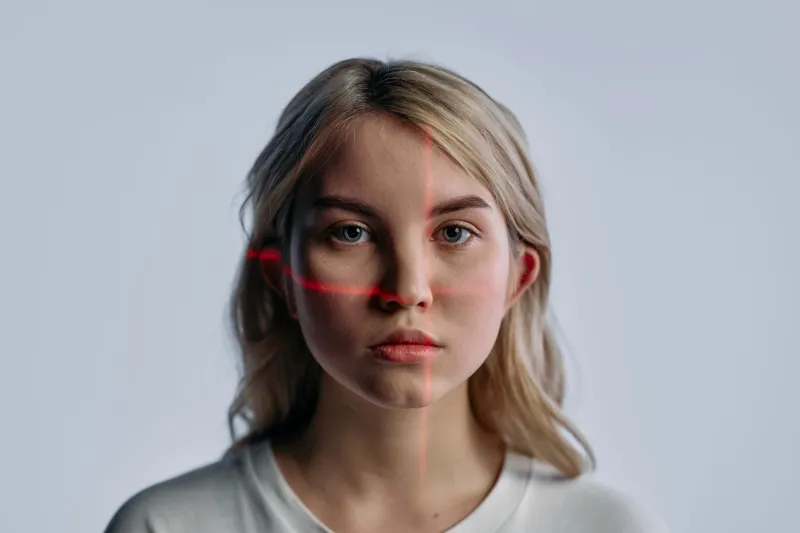
Photo by Photo by A Chosen Soul on Unsplash on Unsplash
Not long ago, fabricating a convincing video of someone required a professional studio, a significant budget, and weeks of post-production work. Today, a motivated individual with a consumer-grade laptop and a handful of publicly available photographs can produce a synthetic video that fools the untrained eye in a matter of hours. The democratization of deepfake technology has quietly outpaced public awareness — and the consequences for everyday Americans are becoming very real.
What Deepfakes Actually Are
The term "deepfake" refers to synthetic media — video, audio, or still images — generated or manipulated using artificial intelligence, specifically a class of machine-learning architecture known as a generative adversarial network, or GAN. In a GAN, two neural networks compete against each other: one generates fake content, and the other attempts to distinguish that content from authentic material. Over thousands of iterations, the generator learns to produce output convincing enough to fool its adversary — and, eventually, a human viewer.
Face-swapping is the most widely recognized application, but the technology extends further. Voice cloning tools can replicate a person's vocal patterns from as little as three seconds of recorded audio. Lip-sync models can animate a still photograph to match any audio track. Real-time deepfake filters, increasingly available as consumer apps, can alter a person's appearance during a live video call.
The barrier to entry has collapsed. Several open-source tools require no coding knowledge, and cloud-based services offer deepfake generation on a subscription basis.
The Real-World Harm Is Not Hypothetical
For most Americans, the deepfake threat does not arrive in the form of geopolitical disinformation — it arrives as a personal attack.
Romance and financial scams represent one of the fastest-growing vectors. The FBI's Internet Crime Complaint Center has documented a sharp rise in cases where fraudsters use AI-generated video during live calls to impersonate romantic partners or investment advisors, convincing victims to transfer substantial sums of money before the deception is uncovered.
Non-consensual intimate imagery is another devastating application. Researchers at Sensity AI have estimated that the overwhelming majority of deepfake videos circulating online fall into this category — fabricated explicit content featuring real individuals who never consented to its creation. Victims, predominantly women, face profound reputational, professional, and psychological harm. While a growing number of states have enacted legislation targeting this abuse, enforcement remains inconsistent.
Workplace and reputational sabotage rounds out the threat picture. A fabricated video depicting an executive making inflammatory statements, or an employee behaving inappropriately, can circulate widely on social media before any correction reaches the same audience. The asymmetry between viral misinformation and its correction is a well-documented phenomenon — and deepfakes exploit it ruthlessly.
How to Detect Synthetic Media
No single detection method is foolproof, but a layered approach significantly improves your ability to identify manipulated content before acting on it.
Look for Physiological Inconsistencies
Early deepfake models struggled to render natural eye blinking. While newer systems have largely corrected this, they continue to produce subtle artifacts in areas of high complexity: the boundary between the face and hairline, the rendering of teeth and gums, the behavior of earrings or glasses under movement, and the way skin texture responds to changes in lighting. Watch video at reduced playback speed and pay close attention to these zones.
Examine the Lighting and Shadows
AI-generated faces are composited onto existing footage, and the lighting model applied to the synthetic face does not always match the ambient lighting of the scene. Shadows that fall in inconsistent directions, or skin that appears to emit its own flat light, are telltale signs of manipulation.
Listen as Carefully as You Watch
Cloned voices often carry a subtle metallic quality, particularly during consonant-heavy words or at the ends of sentences where natural prosody would introduce variation. Background audio may not match the visual environment. In video calls, introduce unexpected conversational pivots — cloned voices and real-time filters tend to falter when asked to respond to genuinely spontaneous input.
Use Dedicated Detection Tools
Several organizations offer free or low-cost deepfake detection resources accessible to the public:
- Microsoft's Video Authenticator analyzes media for manipulation signals at the pixel level.
- Sensity AI provides enterprise-grade detection but publishes research and resources useful to general readers.
- FotoForensics (fotoforensics.com) applies error-level analysis to images, revealing inconsistencies introduced during digital editing.
- InVID / WeVerify is a browser extension widely used by journalists to verify video provenance and detect manipulation.
None of these tools should be treated as definitive. They are aids to judgment, not replacements for it.
Verify Provenance Before Sharing
Reverse-image and reverse-video searches remain among the most underutilized verification tools available to ordinary users. Google Images, TinEye, and Bing Visual Search can surface the original context of an image within seconds. For video, uploading key frames to these services can reveal whether footage has been repurposed or altered.
Protecting Your Own Digital Likeness
Defensive posture matters. The raw material for a deepfake is the publicly available media you have already shared.
Audit your public footprint. Review the photographs and videos you have posted across social media platforms. Consider whether your privacy settings genuinely restrict access to people you trust. High-resolution images and extended video clips provide the richest training data for synthetic-media tools.
Register for notification services. Google Alerts for your name is a basic but effective first step. More sophisticated services, such as those offered by identity-protection platforms, scan for unauthorized use of your likeness across the web.
Establish a personal verification code. For close family members and colleagues, agree on a word, phrase, or question-and-answer pair that can be used to authenticate identity during unexpected video or voice calls — particularly those involving financial requests.
Document your authentic media. Maintaining a timestamped archive of your genuine photographs and videos provides a baseline you can present if your likeness is ever used without consent. This documentation can be critical if legal action becomes necessary.
The Verification Imperative
The broader lesson deepfakes impose on digital life is uncomfortable but necessary: visual and auditory evidence is no longer self-validating. The instinct to trust what we see and hear is deeply human — and it is precisely that instinct that synthetic-media tools are engineered to exploit.
Building a habit of verification is not paranoia. It is the appropriate response to an information environment in which the cost of fabrication has fallen to near zero. Before acting on compelling media — before sharing it, before making a financial decision based on it, before allowing it to shape your opinion of another person — pause. Apply the tools and techniques available to you. Seek corroboration from independent sources.
In the age of synthetic media, skepticism is not cynicism. It is due diligence.